
What Each One Is
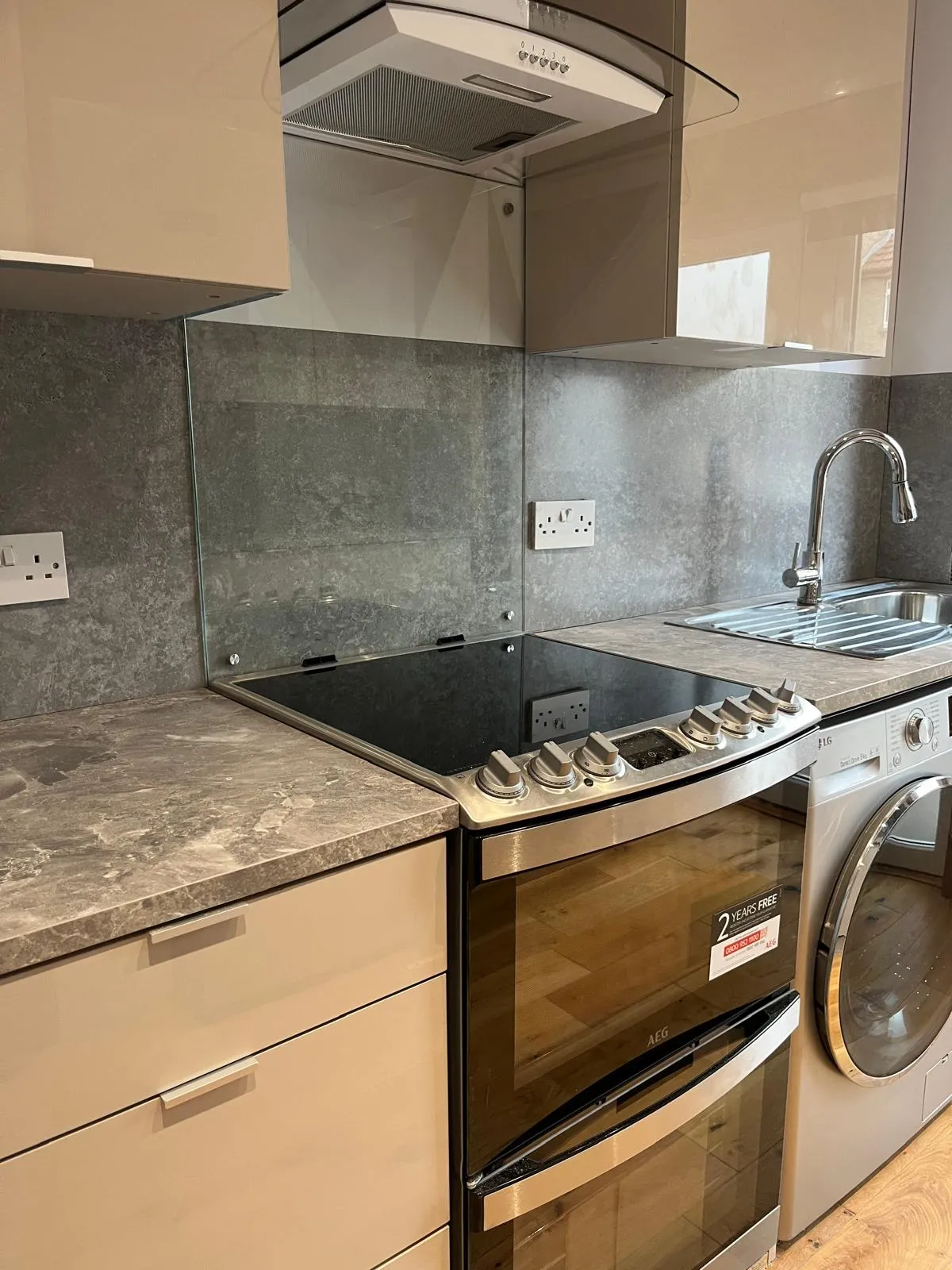
A freestanding cooker is an oven, a grill and a hob in a single box that stands on the floor between two units. Most are 50cm, 55cm or 60cm wide. The larger cousin is the range cooker, commonly 90cm, 100cm or 110cm wide, with two or more ovens and five or more burners or zones.
A built-in oven has no hob and no finished sides. It slides into a kitchen cabinet and is screwed in place, with the hob bought separately and set into the worktop. There are three common shapes:
- Single oven, about 60cm high. It fits under the worktop or in a tall housing at eye level.
- Built-under double oven, about 72cm high. Two smaller cavities made to fit below the worktop.
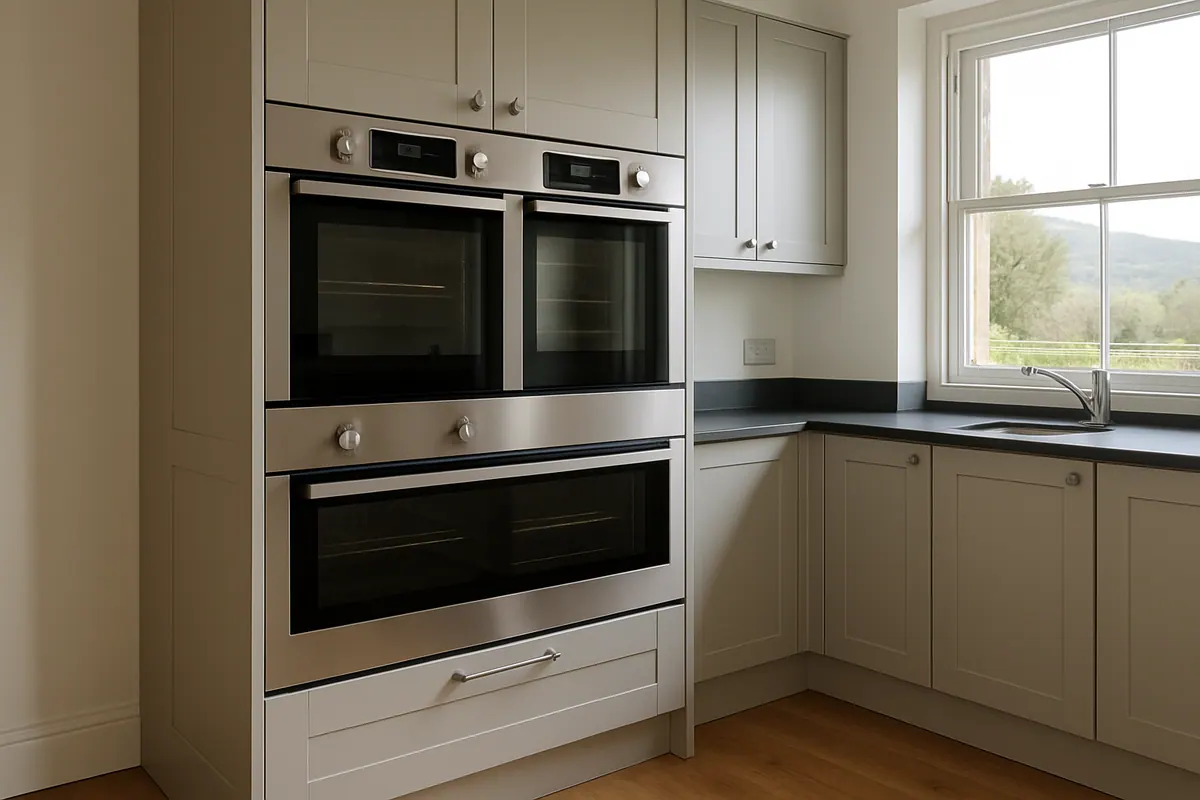
- Built-in double oven, about 90cm high. A full main oven with a second oven and grill above it, made for a tall housing only.
Those heights are typical, not exact, so always check the maker's fitting diagram for the model you want.
The Differences At A Glance
| Consideration | Freestanding cooker | Built-in oven and separate hob |
|---|---|---|
| Works with an existing kitchen | Yes, if the gap is the right width | Only if there is a suitable housing |
| Oven height | Low, you bend to it | Can be at eye level |
| Choice of hob | Comes with the cooker | Any hob you like |
| Cleaning round it | Gaps at each side catch crumbs | Sealed into the units |
| Upfront cost | One purchase, usually cheaper | Two appliances plus a housing |
| Replacing one part | Whole cooker goes | Swap the oven or the hob alone |
| Taking it with you | Easy | Normally stays |
The Case For A Freestanding Cooker
Freestanding cookers earn their place in plenty of Scottish homes, and not only on price.
They are simple to replace. If your kitchen already has a cooker gap, a new one slides in with no joinery at all. That matters if the units are in good shape and you only want better cooking.
They pack a lot into a small footprint. A 60cm cooker with a double oven gives you a main oven, a second oven with a grill and four hob zones in the width of one unit. In a compact flat that is hard to beat.
They suit tenants and movers. The cooker is yours and it leaves with you.
The drawbacks are the low oven door, the narrow gaps down each side where spills run, and the way the back upstand and control panel break the clean line of the worktop.
The Case For A Built-In Oven
Comfort. An oven in a tall housing puts the shelf you use most at about chest height. You lift a heavy roasting tin straight out instead of hauling it up from knee level. Anyone with a sore back or stiff knees notices the difference on day one, and it keeps hot trays further from small children.
Freedom to choose. Because the hob is separate, you can pair an electric oven with a gas hob, or go for induction, and you can put the hob on an island while the ovens stay in a bank of tall units.
A tidier finish. The oven sits flush with the cabinet fronts and there are no gaps beside it. If the colour of the appliance matters to you, have a look at our piece on stainless steel versus black appliances, because a built-in oven at eye level is very much on show.
Easier repairs later. If the oven fails after many years, you replace the oven and keep the hob, or the other way round.
The cost is space. A tall oven housing uses 60cm of wall that could have been worktop, which is a real sacrifice in a very small room.

Single Or Double Built-In Oven
This is the question people ask straight after choosing built-in.
A single oven has the biggest cavity, so it takes the Christmas turkey and the largest trays. On most models the grill is inside the same cavity, which means you cannot roast and grill at once.
A double oven lets you do exactly that, and the small top oven heats up quickly for a couple of fish fillets or a tray of chips. The catch with the built-under type is that both cavities are fairly small. The 90cm built-in double keeps a full-size main oven, but it must go in a tall housing.
A popular third route is a single oven with a combination microwave oven above it. You get a full-size oven, a second small oven and a microwave, and you free up the worktop where the microwave used to sit.
Where Range Cookers Fit In
A range cooker is freestanding, but people rarely choose one to save money. They choose it because it is the heart of the room. In a farmhouse or a cottage, a range set into the old chimney recess looks right in a way no bank of built-in ovens can.
Ranges need planning. They are wide and heavy, they need a suitably wide extractor above, and the electrical or gas supply has to match the model. They pair naturally with painted doors and timber worktops, as you can see on our country kitchens and shaker kitchens pages.

Electrics, Gas And Ventilation
This is general guidance only. The installation instructions for your model, and the person connecting it, have the final say.
- Electric cookers and double ovens draw a lot of power and normally need their own cooker circuit with a wall switch nearby. Older flats do not always have one.
- Some single ovens are made to run from a standard 13 amp plug. Others are not. Check the rating before you buy, and have any new circuit or hardwired connection done by a qualified electrician.
- Gas and dual fuel cookers must be connected by a Gas Safe registered engineer.
- Built-in ovens need air. The housing has ventilation gaps designed into it so the oven can cool itself. Do not pack them with anything.
When the oven is part of a full kitchen refit with us, the electrical and gas work is carried out by properly qualified trades alongside the vetted installers fitting the units, and all workmanship is guaranteed.
What Drives The Cost
We do not list appliance prices, because they shift too often to be honest for long. These are the things that move the total:
- One appliance or two. A cooker is a single purchase. Built-in means an oven and a hob, and perhaps a second oven.
- Cabinet work. A tall housing and its filler panels are extra joinery. A built-under oven needs only a standard oven base unit.
- Cleaning system. Pyrolytic ovens, which burn residue to ash at very high heat, cost more than ovens with wipe-clean or catalytic liners.
- Electrical work. Adding a cooker circuit to a home that lacks one is a separate job.
For the kitchen as a whole, small galley refits with us start from around £6,000 and most family kitchens come in between £8,000 and £15,000. We can supply Neff, Bosch, Siemens and AEG appliances or fit your own. Finance is available from £35 a week, subject to status.
Which To Pick
Keeping the kitchen you have? Replace like with like. A cooker gap takes a cooker, and an oven housing takes a built-in oven of the same height.
Starting again? Go built-in unless you want a range. Put the main oven at eye level if you have the wall space, and under the worktop if you do not.
Very small kitchen? A built-under single oven with a hob above keeps every centimetre of worktop. Our small kitchens page has more ideas.
Oven position changes how the whole room works, so it is worth seeing it drawn before you decide. Book a design visit through our kitchens page, or if you are in the city, start with kitchens in Glasgow.
Quick Answers
Is a built-in oven better than a freestanding cooker?
It is more comfortable and neater in a new kitchen. A freestanding cooker is cheaper and far easier to swap in an existing one.
Can I put a built-in oven where my cooker was?
Not directly. The gap has to be filled with an oven base unit and a length of worktop with a hob set into it. It is a common small alteration.
Do built-in ovens just plug in?
Some single ovens do. Double ovens and most cookers need a dedicated cooker circuit. Ask a qualified electrician.
What size is a built-in oven?
Nearly all are about 60cm wide. Heights are roughly 60cm for a single, 72cm for a built-under double and 90cm for a built-in double.
Is an eye-level oven worth the lost worktop?
In most medium and large kitchens, yes. In a very small kitchen, worktop usually wins and the oven goes underneath.
Working out where the oven should go?
A designer plans your layout in 3D, so you can see oven heights and positions before anything is ordered. The quote is free and there is no obligation.


 Google